A new planet, unusual signal, distant galaxy, or possible biosignature should be fascinating. Yet even an exciting space discovery can lose an audience when the explanation begins with instrument settings, dense charts, and five minutes of background.
An analysis of 90 presentation videos found that 72% of 610 visual elements were not described adequately aloud, showing how easily audiences can miss what a presenter assumes is obvious.
So, how do you preserve the wonder without oversimplifying the science? This guide explains how to structure, visualize, explain, and deliver a space discovery presentation that keeps non-specialists curious and informed.
Key Points
The methods below help you turn a technical result into a clear journey that gives the audience enough context without making them work harder than necessary.
- Start with the discovery’s meaning, not the research timeline.
- Match the explanation to what your audience already understands.
- Build slides around one visual idea at a time.
- Translate measurements into scale, comparison, and consequence.
- Separate confirmed evidence from interpretation and speculation.
- Rehearse transitions, questions, and likely points of confusion.
Here’s the thing: a strong presentation does not remove complexity. It controls when complexity appears. That distinction protects scientific accuracy while keeping listeners oriented from the opening question to the final takeaway.
Lead With the Discovery, Then Earn the Details
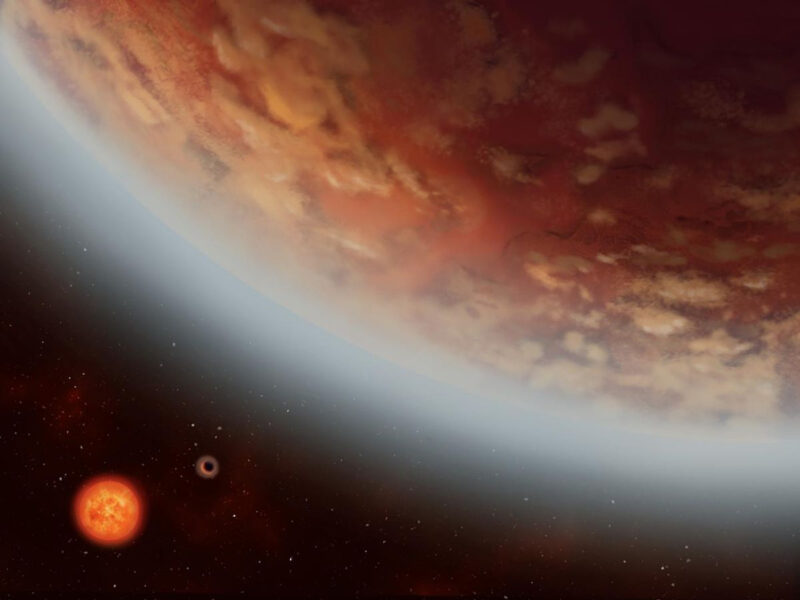
Begin with one sentence that answers three questions: what was found, where it was found, and why it matters. For example: “Astronomers detected water vapor around a rocky world where temperatures may allow liquid water.” Only after that should you introduce the telescope, wavelength, sample, or statistical method.
Audience-centered science communication starts by identifying what listeners need to understand and what decisions or judgments they may face, rather than simply transmitting everything the research team knows.
Your opening sequence can follow this order:
- The discovery
- The human-scale meaning
- The evidence
- The limits
- The next investigation
This creates curiosity first. The technical explanation then feels like an answer, not an obstacle for the audience.
Use Presentation Design to Direct Attention
Space imagery is naturally powerful, but spectacular visuals can still become clutter. Good presentation design gives every slide a single job: reveal the object, explain the measurement, compare the result, or show why the finding matters. Avoid asking one slide to do all four.
NASA’s Scientific Visualization Studio emphasizes that complex data must be translated into accessible messages while preserving scientific integrity and visual engagement.
Use these checks before keeping a slide:
- Can someone identify the main point in three seconds?
- Is the key feature highlighted with a label, crop, or simple marker?
- Does every color have a meaning?
- Can the slide be understood from the back of the room?
The good news? Removing elements usually improves the story faster than adding new ones.
Translate Numbers Into Scale and Consequence
“Twenty-seven light-years away” is accurate, but it may not feel meaningful. Give the number a role. Explain that the light reaching the telescope began its journey 27 years ago, or compare the distance with the nearest star system. Then return to the scientific point before the analogy takes over the presentation.
Use comparisons carefully:
| Technical detail | Audience-friendly translation | What to avoid |
| Planet radius | About 1.3 times Earth’s radius | “Almost identical to Earth” |
| Signal confidence | Strong enough to justify follow-up observations | “Scientists proved it” |
| Galaxy age | Seen as it existed billions of years ago | “A photograph from the beginning of time” |
A useful analogy clarifies one relationship. It should not quietly introduce claims the evidence cannot support. Always state where the comparison stops being exact.
Replace Jargon Without Removing Precision
Terms such as transit spectroscopy, redshift, accretion disk, and biosignature may be necessary, but they should arrive with an immediate translation. Research has found that jargon makes scientific information harder to process and can increase resistance to the message.
More recent work also suggests that appropriate jargon avoidance can improve perceptions of a communicator’s integrity and goodwill.
Try a simple three-step pattern:
- Name the term.
- Explain it in everyday language.
- Show why it matters to this discovery.
For example: “Redshift is the stretching of light as the universe expands. By measuring it, researchers estimate how far away the galaxy is.”
Plain-language rule: If a technical word does not improve accuracy, shorten the explanation, or help the audience follow later slides, remove it.
Precision comes from clear definitions, not from using the maximum number of specialist terms.
Show the Evidence Before the Interpretation
Let the audience see what scientists actually measured. Display the image, spectrum, light curve, map, or detector reading first. Then highlight the relevant feature and explain how researchers moved from observation to interpretation.
This sequence builds trust because listeners can distinguish the data from the conclusion. It also prevents a common problem: presenting an artist’s impression as though it were a direct photograph.
A practical evidence slide should include:
- What the instrument detected
- Which feature matters
- What comparison or model was used
- What alternative explanation remains possible
- Where the complete study or dataset can be found
NASA’s visualization guidance notes that public-facing graphics can support understanding but can also introduce miscommunication when complex data are simplified poorly. Credit every image and clearly label simulations, composites, illustrations, and enhanced-color images.
Treat Uncertainty as Part of the Discovery
Do not hide uncertainty in a small final slide. Explain it when the claim first appears. Phrases such as “possible evidence,” “consistent with,” and “the leading explanation” tell the audience exactly how strong the conclusion is.
NASA’s Confidence of Life Detection framework uses a progressive scale to communicate how evidence for possible life could strengthen through contamination checks, alternative explanations, independent confirmation, and additional observations. It was designed partly because life-detection claims are complex and vulnerable to sensationalism.
Did you know? A dramatic space result may become more credible when the presenter openly describes what would disprove it. That does not weaken the discovery. It demonstrates scientific discipline.
Give the audience three separate labels: what is known, what is likely, and what scientists still need to test.
Build a Story, Not a Suspense Trick
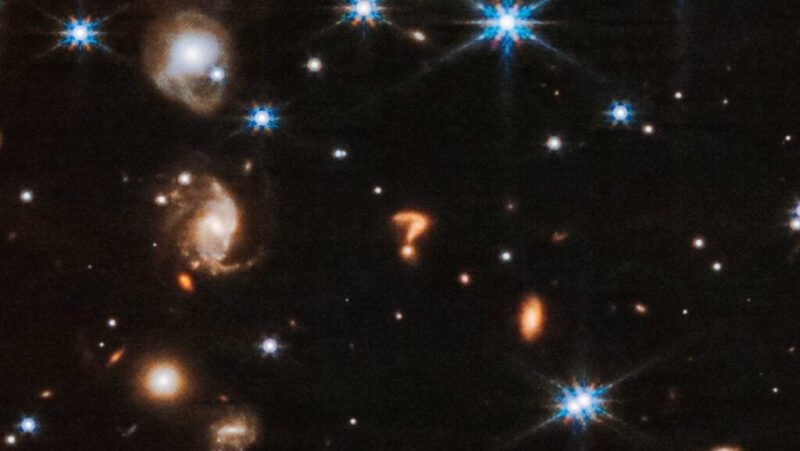
A space discovery already contains a natural narrative: a question, a search, an unexpected signal, a test, and a new question. Use that structure, but do not manufacture mystery by withholding essential context or exaggerating the reveal.
Try this five-part story arc:
- We expected to find…
- The instrument observed…
- One detail did not fit…
- The team tested several explanations…
- The result changes what researchers investigate next.
This approach gives technical details a purpose. Every chart becomes evidence in a developing argument.
Keep the scientists visible, too. Briefly explain who collected the data, who checked the analysis, and whether another team has reproduced the result.
Rehearse for Attention, Accessibility, and Questions
Rehearsal is not only about timing. It reveals where the audience gets lost. Present once to someone outside the field and ask them to explain the discovery back to you.
Any gap in their retelling identifies a missing transition, undefined term, or overloaded slide.
Use a final rehearsal checklist:
- Describe every important visual aloud.
- Pause after the central finding.
- Explain acronyms on first use.
- Prepare a 20-second and a two-minute summary.
- Anticipate questions about certainty, distance, and practical significance.
- Confirm that labels, captions, and contrast remain readable.
Evidence-based guidance for scientific presentations recommends explicit structure, inclusive delivery, and active attention to how different audience members access information.
Finish the talk on the next scientific question. Discovery feels larger when the audience understands where the investigation goes from here.
Frequently Asked Questions
Keep the Wonder, Control the Complexity
Presenting a new space discovery is not a contest to display everything you know. It is an invitation to help other people see why the result matters, how the evidence supports it, and what remains uncertain.
Start with two manageable actions: rewrite your opening as one clear discovery statement, then remove anything from the first three slides that does not support it. Once that foundation works, improve the comparisons, labels, sourcing, and rehearsal.
Your audience does not need a simplified universe. It needs a well-guided path through a complex one. Give people that path, and the wonder will take care of itself.